
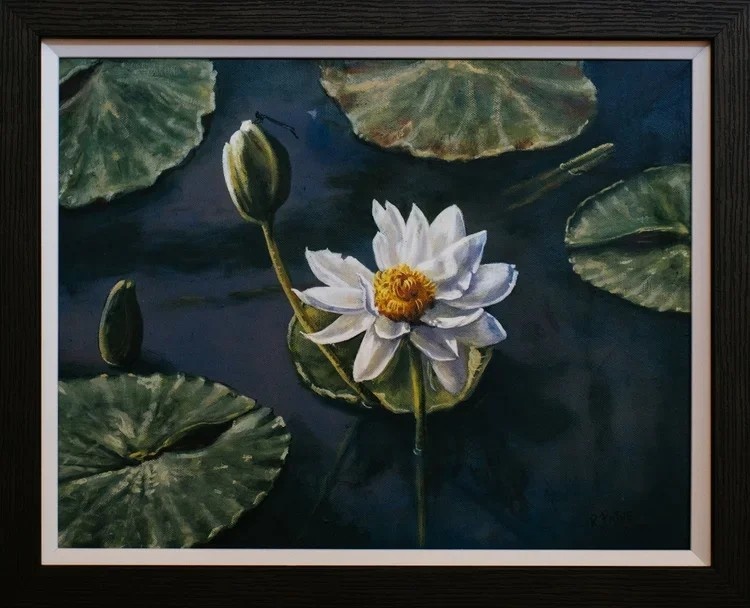
Realistic art drawings are admired for their ability to transform simple lines and tonal values into remarkably detailed representations of people, animals, landscapes, objects, and everyday scenes. Unlike highly stylised or abstract artwork, realistic drawing focuses on observing the subject carefully and translating its proportions, textures, light, and shadows onto paper.
Creating realistic art requires patience, practice, observation, and a strong understanding of drawing fundamentals. Artists must learn how light behaves, how perspective affects objects, and how subtle changes in tone can create the appearance of depth. The result can be a drawing that feels remarkably lifelike while still reflecting the artist's individual style.
For collectors and art enthusiasts, realistic drawings offer an opportunity to appreciate both the subject and the technical skill involved in creating it.
What Are Realistic Art Drawings?
Realistic art drawings aim to represent subjects in a recognisable and visually believable way. Artists carefully study proportions, shapes, textures, shadows, highlights, and perspective.
Realistic drawing can include many subjects, such as:
- Portraits
- Animals
- Australian landscapes
- Buildings
- Still-life compositions
- Plants and flowers
- Wildlife
- Rural scenes
- Everyday objects
The goal is not necessarily to create a perfect photographic copy. Instead, the artist interprets what they observe while maintaining believable proportions, lighting, and details.
This combination of observation and artistic expression makes realistic drawings fascinating to create and collect.
The History of Realistic Drawing
Realistic drawing has existed for centuries. Artists have traditionally used drawing as a way to study anatomy, architecture, nature, and the human environment.
Before modern photography, detailed drawings played an important role in documenting people, places, plants, and animals.
Today, realistic artists continue this tradition while benefiting from modern materials, reference photography, digital resources, and contemporary approaches.
Although technology has changed the way artists work, the fundamental skills of observation and drawing remain essential.
Why Realistic Art Requires Skill
Realistic drawing can be challenging because small mistakes in proportion or perspective can significantly affect the final result.
Artists must develop an understanding of:
- Proportion
- Perspective
- Anatomy
- Light and shadow
- Tonal values
- Texture
- Composition
- Depth
Even a simple-looking drawing may require hours of careful observation and refinement.
Experienced artists learn to break complicated subjects into basic shapes before adding finer details.
The Importance of Observation
Observation is one of the most important skills in realistic art.
Instead of drawing what they think an object should look like, artists learn to draw what they actually see.
For example, when drawing a tree, an artist observes:
- The direction of branches
- The shape of the trunk
- Light falling across the bark
- Negative spaces between branches
- The texture of leaves
- Shadows beneath the tree
This careful observation creates a more convincing result.
Regular observational drawing is one of the most effective ways to improve realistic art skills.
Understanding Proportion
Proportion refers to the relationship between different parts of a subject.
In portrait drawing, for example, the size and placement of the eyes, nose, mouth, ears, and head must work together naturally.
In landscape drawing, proportion helps communicate distance and scale.
Artists often compare measurements and relationships rather than relying entirely on memory.
Accurate proportion creates a strong foundation for realistic artwork.
The Role of Light and Shadow
Light and shadow are essential for creating three-dimensional form.
A drawing can appear flat if it does not contain enough tonal variation.
Artists study:
- Highlights
- Mid-tones
- Core shadows
- Reflected light
- Cast shadows
By gradually transitioning between light and dark areas, artists can create the illusion of volume.
For example, a rounded object needs gradual tonal changes to appear three-dimensional.
Understanding light is therefore fundamental to realistic drawing.
Pencil Techniques for Realistic Drawings
Graphite pencils are among the most popular materials for realistic artwork.
Artists may use different pencil grades to create a wide range of tones.
Common techniques include:
Hatching
Parallel lines are used to build tone.
Cross-Hatching
Overlapping lines create darker values and texture.
Blending
Graphite is softened to create smooth tonal transitions.
Stippling
Small dots are used to build tone and texture.
Layering
Multiple layers of graphite gradually create depth and detail.
Each technique produces a different visual effect, and experienced artists often combine several methods within a single drawing.
Creating Texture
Texture is particularly important in realistic art.
Different surfaces require different approaches.
For example:
- Fur requires many fine directional marks.
- Wood may require irregular lines and tonal variation.
- Metal often requires sharp highlights.
- Glass requires careful reflections.
- Skin requires subtle tonal transitions.
- Leaves require delicate shapes and veins.
Artists must observe how light interacts with each surface to reproduce texture convincingly.
Realistic Landscape Drawings
Realistic art drawings are not limited to portraits and still life. Landscapes can also be represented with remarkable detail.
Australian landscapes provide particularly interesting subjects.
Artists can create detailed drawings of:
- Eucalyptus trees
- Australian bushland
- Rivers
- Mountains
- Rural properties
- Outback scenery
- Native wildlife
- Coastal landscapes
Graphite and charcoal can be particularly effective for Australian landscape drawings because they capture the strong contrasts between sunlight, shadows, vegetation, and rugged terrain.
Realistic Wildlife Drawings
Australia's unique wildlife provides endless inspiration for realistic artists.
Kangaroos, koalas, native birds, reptiles, and other animals can be challenging subjects because their anatomy, fur, feathers, and scales require careful observation.
Wildlife drawings often combine anatomical accuracy with detailed texture.
Artists must pay close attention to:
- Body proportions
- Fur or feather direction
- Eye placement
- Facial structure
- Lighting
- Movement
A successful wildlife drawing can communicate both physical realism and the personality of the animal.
Choosing Materials for Realistic Drawing
The quality of materials can influence the drawing process.
Popular materials include:
- Graphite pencils
- Charcoal
- Coloured pencils
- Fine drawing pens
- Quality drawing paper
- Blending tools
- Kneaded erasers
Smooth paper is often useful for highly detailed graphite drawings, while textured paper can provide interesting effects for charcoal and other media.
Artists typically experiment with different materials to discover what best suits their style.
Realistic Art in Interior Design
Realistic drawings can make beautiful additions to homes and professional environments.
They can be displayed in:
- Living rooms
- Bedrooms
- Offices
- Libraries
- Hallways
- Galleries
- Studios
Black-and-white graphite drawings can complement minimalist interiors, while coloured realistic drawings can introduce warmth and visual interest.
A detailed drawing can also become a conversation piece because viewers often appreciate the skill required to create it.
Buying Realistic Art Drawings
When purchasing realistic art, consider several factors.
Original or Reproduction
Original drawings offer uniqueness and direct connection with the artist.
Subject
Choose a subject that has personal meaning.
Technique
Look closely at the artist's use of line, tone, texture, and detail.
Size
Consider how the artwork will fit into the intended space.
Presentation
Professional mounting and framing can protect the drawing and enhance its appearance.
The best artwork is ultimately the piece that creates an emotional response.
Supporting Artists Through Original Artwork
Purchasing original realistic drawings directly supports artists and their creative practices.
Artists spend considerable time developing their technical abilities, studying subjects, experimenting with materials, and producing finished artwork.
Buying original art helps independent artists continue creating and sharing their work.
It also allows collectors to own something genuinely unique rather than mass-produced decoration.
Developing Realistic Drawing Skills
Anyone interested in realistic art can improve through regular practice.
Useful approaches include:
- Draw regularly.
- Study real objects.
- Practice basic shapes.
- Learn perspective.
- Experiment with light and shadow.
- Study anatomy when drawing people or animals.
- Practice different textures.
- Compare your drawings with your references.
- Be patient with mistakes.
- Continue experimenting.
Progress often comes gradually. Consistent practice is more important than trying to create a perfect drawing immediately.
The Value of Patience
Realistic drawings can take many hours or even days to complete.
Artists may repeatedly refine small areas, adjust tonal values, and add details.
This slow process is part of what makes realistic art special.
The finished drawing represents not only the subject but also the time, concentration, and discipline invested by the artist.
For collectors, understanding this process can make the artwork even more meaningful.
Conclusion
Realistic art drawings combine observation, technical skill, patience, and artistic expression. Through careful use of proportion, perspective, light, shadow, texture, and detail, artists can transform simple lines and tonal values into convincing representations of the world around them.
From detailed portraits and wildlife studies to Australian landscapes and natural scenes, realistic drawings offer endless creative possibilities. They can enhance interiors, become treasured personal possessions, and provide collectors with an opportunity to appreciate the dedication behind handmade artwork.
Whether you are an aspiring artist or an art enthusiast looking for something distinctive, realistic drawing demonstrates the extraordinary possibilities that can emerge from careful observation and a simple drawing surface.
Frequently Asked Questions
1. What are realistic art drawings?
Realistic art drawings are artworks created to represent subjects with believable proportions, details, textures, lighting, and perspective.
2. What materials are commonly used for realistic drawings?
Graphite pencils, charcoal, coloured pencils, fine drawing pens, quality paper, blending tools, and kneaded erasers are commonly used.
3. How long does a realistic drawing take?
The time varies depending on the size, complexity, medium, and level of detail. A highly detailed drawing can take many hours or several days.
4. Can beginners learn realistic drawing?
Yes. Beginners can develop realistic drawing skills through regular practice, observation, and learning fundamentals such as proportion, perspective, shading, and texture.
5. What makes a realistic drawing look three-dimensional?
Accurate proportions combined with carefully controlled light, shadow, highlights, and tonal transitions help create the illusion of three-dimensional form.